Database development prevents information from spreading across spreadsheets, reports from slowing down and backups from remaining untested. Data is rarely lost all at once: it first multiplies across spreadsheets, then the same information differs between files and reports begin to take minutes. I build databases that stop this: structure first, then database optimization for speed, a database migration service when data has to move, and database backups that actually restore.
One fact, one place
A customer, item or order is entered once. When the same fact lives in several spreadsheets, differences eventually appear.
Measured, not guessed
The slowest queries are measured before and after the work, so you receive a difference in seconds.
A backup that restores
A backup is valuable only after it restores to an empty server and the recovery time is measured.
Where this makes sense
Excel has outgrown itself
Data moves to a database with a simple entry and search screen, so everyone uses the same current information.
The system has become slow
I find slow queries, add missing indexes and correct what the database cannot optimise by itself.
A legacy database
Its structure is documented and data can move to a database that can be maintained.
Data in several systems
Sales, warehouse and accounting data can be joined through a common key or copied to a reporting database.
Technologies
I work with MySQL, MariaDB, Microsoft SQL Server, PostgreSQL and SQLite. The choice depends on your system, data volume and hosting environment.
A database rarely stands alone. I also build desktop software, websites and AI features that use its data.
Delivered
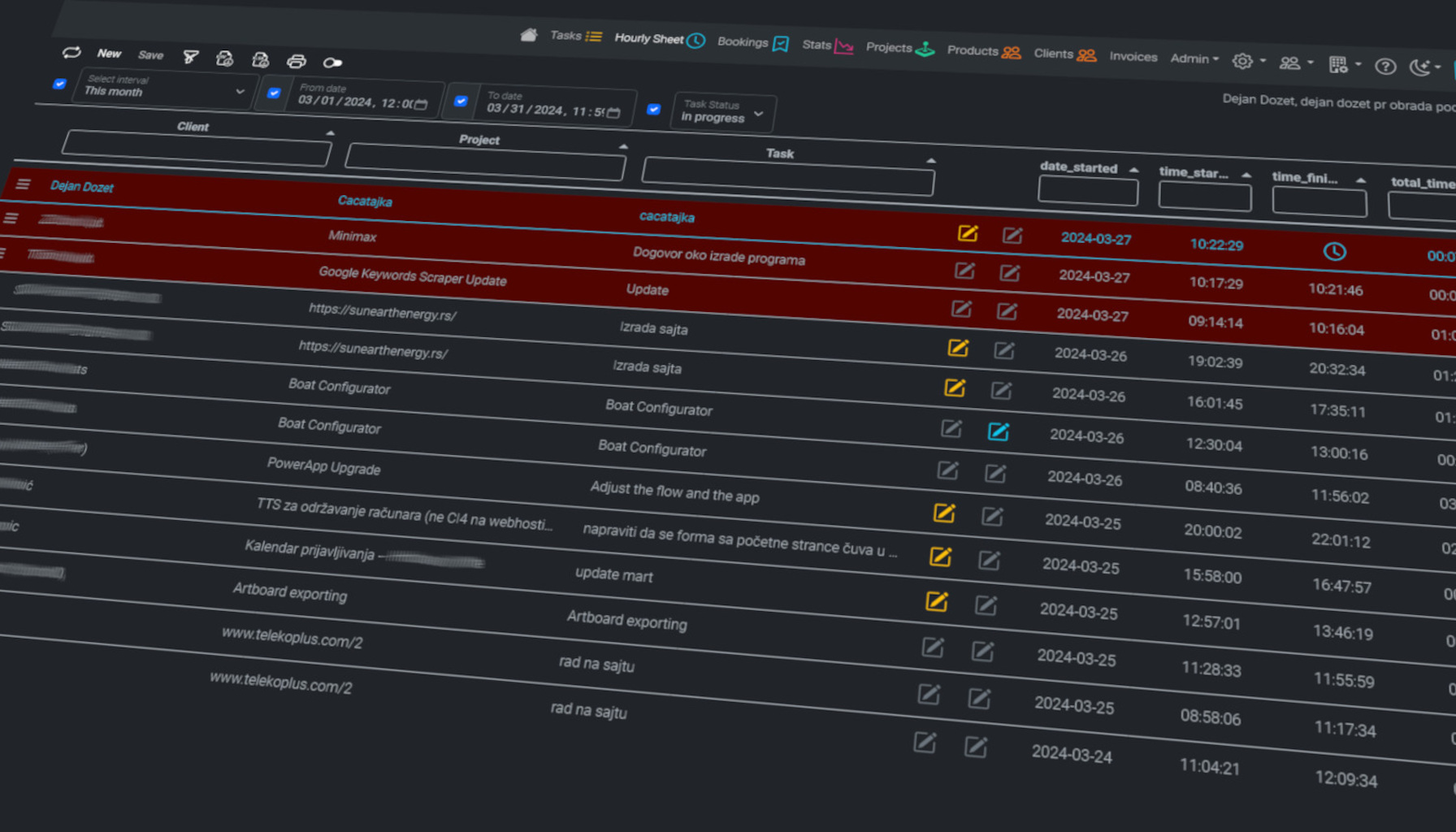
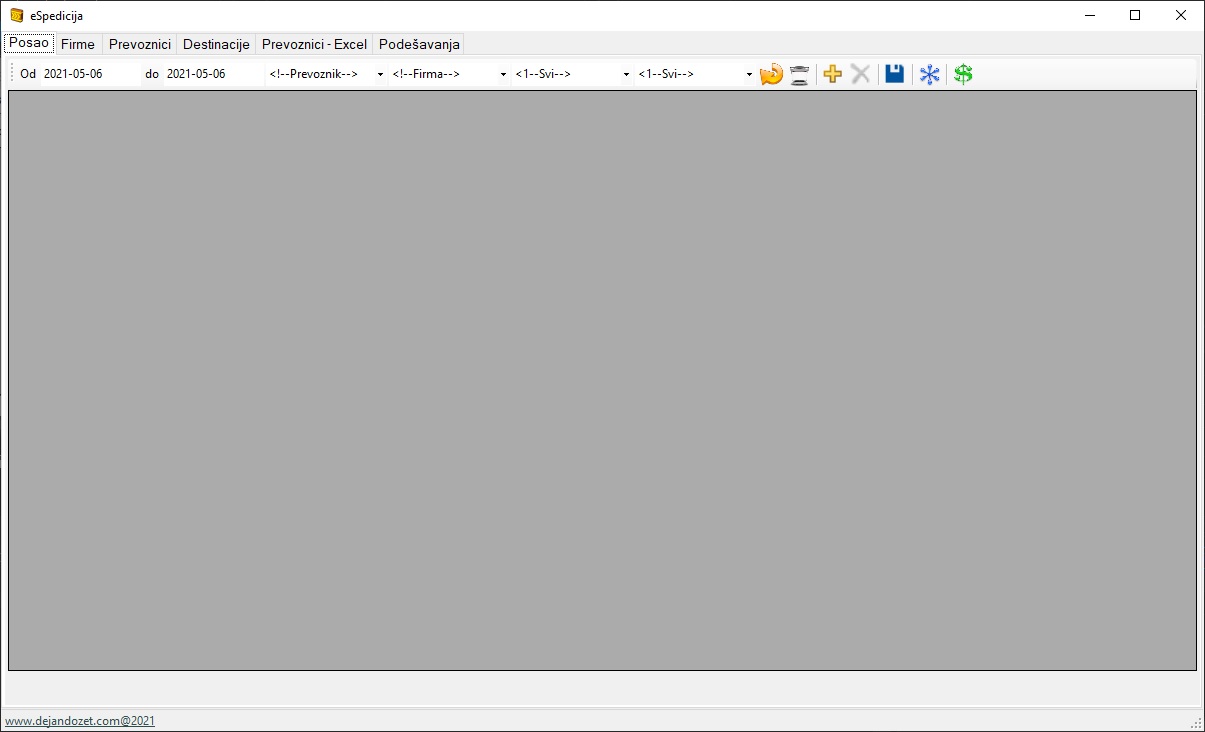
Databases are part of almost every job I do: design, optimization and migration, in web applications and in Windows programs.

Pricing
Prices are public so you can see the order of magnitude. The final price and deadline follow the paid database review.
Database development
Speeding up a database and its queries
For when a report is kept waiting and the program used to be fast.
- Measurement before the work, so the starting point is known.
- Adding the indexes that are missing and removing the ones that only slow writing down.
- Rewriting the most expensive queries and reports.
- Tuning the database to the amount of data you actually have and to the server's memory.
- Measuring again, and a written account of the difference.
Backups and recovery
So that the backup is not a file you merely hope is good.
- An agreement on how many hours of work you may lose and how long you may be down.
- Automatic backups to match that agreement, including the log file when the database calls for it.
- At least one copy off the server the database lives on.
- A restore tested on an empty server, with the recovery time measured.
- A notice when a backup fails, instead of silence.
Moving data into a new database
Out of Excel sheets, Access, or a system being switched off.
- An inventory and documentation of the structure as it stands.
- Cleaning the data: the same customer entered several ways, dates kept as text, empty fields that mean something.
- Migration scripts that can be run again and again, up to the last trial run.
- Verification: record counts, sums over the key columns, and a sample you choose yourself.
- The old database stays untouched until you confirm the new one is right.
Designing and building a new database
For when the business is just starting, or is being redone from scratch.
- A conversation about the business and an inventory of what is really being recorded.
- A schema with its relations and with rules that keep wrong data out.
- Setting the database up on your server, with access rights by role.
- Backups and monitoring from the first day.
- Documentation of the schema, so that somebody else can carry the work on.
First step: database review
I do not quote a fixed price for a database I have not seen. The review takes two working days, has a fixed price and produces a written finding that remains yours.
- Structure: data location, duplicates and missing relationships.
- Speed: slow queries, missing indexes and measurable improvement.
- Backups: their age and whether they really restore.
- Access: who can read or change data.
- Priorities: work ordered by impact and estimated duration.
Database review
A fixed price and a written report on the state of the database, with the order in which the work should be done, that remains yours.
Price 29.900 RSD ($285.54)
Commitments, scope and preparation
What I commit to:
- Before every piece of work a backup is made and a way back to the previous state is written down.
- The work is first done on a copy, and only then on the system in use.
- Speed is measured before and after, so you get the difference in seconds.
- A backup is actually restored once, so it is known that it works and how long it takes.
- The schema, the scripts and the documentation stay with you, so somebody else can carry the work on.
- If the problem has a cheaper solution than the one you asked for, it says so in the report.
Not included in the price:
I write this so you understand the price before ordering, not after. Everything on the list is something I can do, but it is agreed and charged separately.
- Licences for databases and server software, and the rent for a server or hosting.
- The program or web page through which data is entered and searched — that is a separate job.
- Retyping data by hand from paper or from scanned documents.
- Changes inside somebody else's program that uses the database, when its author is needed for them.
- Out-of-hours standby and a guaranteed response time.
- Data recovery from a physically damaged disk.
Before we start, prepare:
- Access to the database or a backup of it, with permission to work on the copy.
- The name of a person who knows the business — what each table means in practice, not just what it is called.
- How many hours of work you can afford to lose and how long the system may stay down.
- A list of programs and reports that read from that database, so nothing breaks along the way.
- A time slot in which a short outage is allowed, if the work needs one.
Clear limits
I am not an around the clock server administrator and I do not work with Oracle or Db2. I do not recommend a new database when an index, report or data cleanup solves the problem better.
Ownership, access and data
- The database, schema and scripts are yours.
- Accounts and server are in your name.
- Work is tested on a copy whenever possible, with a backup and rollback path before every change.
- Any data copy is agreed in advance and sensitive data can be replaced with samples.
Frequently asked questions
Not sure what the real problem is?
Describe the slow system, duplicate data, fear of loss or an Excel file that has outgrown itself. I will tell you whether it needs a review, a small improvement or no change at all.
Send an enquiry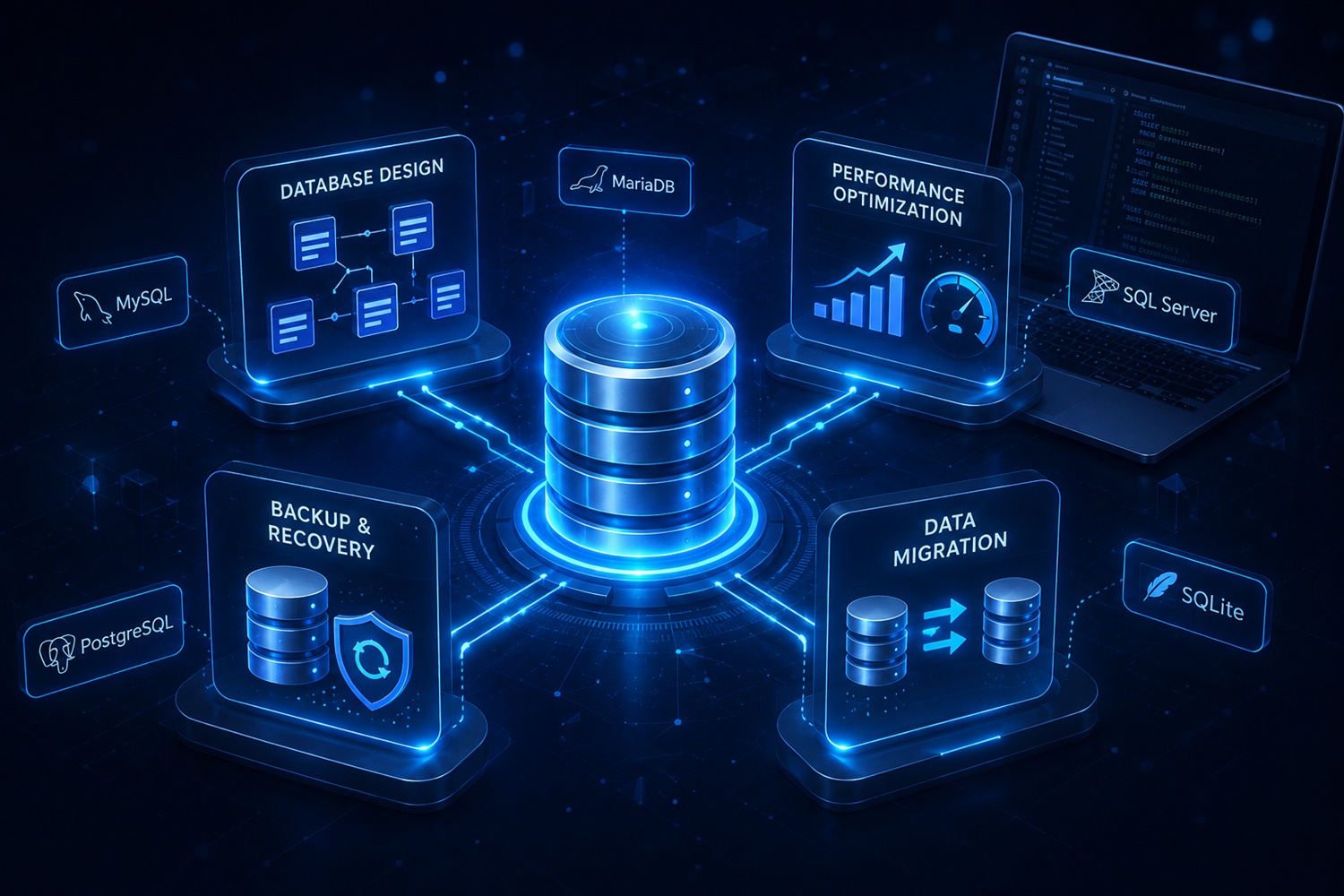
Leave a Comment